Adobe LLM Optimizer: Just Announced — Here is what is promised and how it fits into the mix

Adobe’s launch message is direct. Traditional SEO was built for humans, the next growth curve will be indexed by large‑language models. In its Cannes Lions press release, Adobe says traffic flowing from generative‑AI tools to U.S. retail sites is already up 3,500 % YOY.
Bain & Company, states that 80 % of consumers already rely on AI‑written summaries for at least 40 % of their searches, and Gartner warns organic traffic could drop by half before 2028.
The explosive rise of AI referral traffic
What the brand‑new LLM Optimizer will do (according to Adobe)
Where Adobe’s vision meets OpenAI’s ChatGPT shopping update
Beyond OpenAI & ChatGPT: other generative shopping surfaces you should also explore
Five things you can do today
The explosive rise of AI referral traffic
Adobe Digital Insights published research (23 May 2025) that quantifies how quickly AI‑driven traffic is reshaping digital commerce:
- 10× overall growth in AI‑generated web referrals from July 2024 to February 2025, with retail up 12×, travel 17× and banking 12×.
- Engagement keeps climbing: AI visits now deliver 23 % lower bounce rates, 12 % more page views and sessions 41 % longer than traditional traffic.
- Monetisation is catching up fast: the conversion gap between AI and non‑AI visits shrank from −43 % in July 2024 to −9 % in February 2025, and by December 2024 revenue per visit had reached parity.
Appearance in gen AI responses isn’t just about visibility, it’s unlocking higher‑quality visits that already rival legacy channels in revenue efficiency. Capturing this new traffic early compounds both share and data advantages.
What the brand‑new LLM Optimizer will do (according to Adobe)
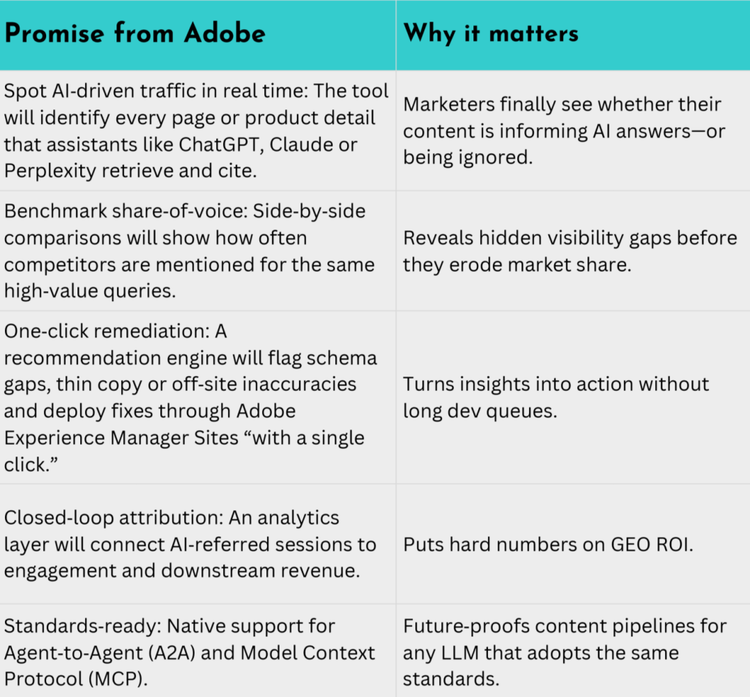
“With Adobe LLM Optimizer, we are enabling brands to confidently navigate this new landscape, ensuring they stand out and win in the moments that matter.” — Loni Stark, VP Strategy & Product, Adobe Experience Cloud
Where Adobe’s vision meets OpenAI’s ChatGPT shopping update
OpenAI’s article, “Help ChatGPT discover your products” (28 Apr 2025), consult merchants to (1) allow the OAI‑SearchBot crawler, (2) prepare structured product feeds, and (3) track visits marked utm_source=chatgpt.com.
The first thing that crossed my mind was how Adobe’s promises extend these steps: crawler-visibility checks, MCP-ready feeds, and an attribution layer that merges ChatGPT traffic with web and mobile metrics.
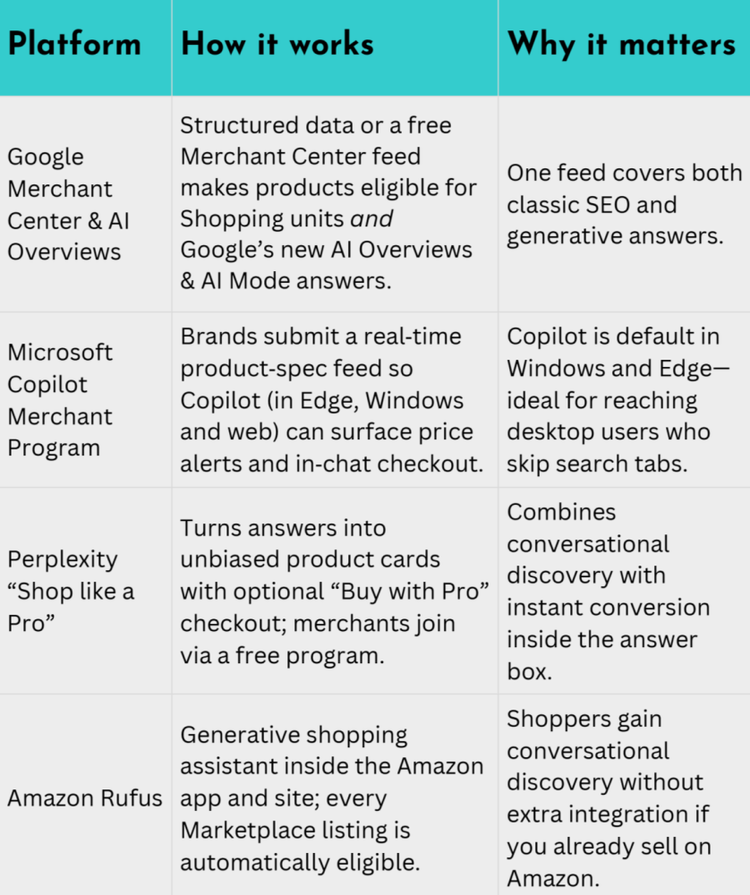
Beyond OpenAI & ChatGPT: other generative shopping surfaces you should also explore
Diversifying discovery across Google, Microsoft, Perplexity, and Amazon protects against platform shifts, and every feed you prep for these surfaces will also power Adobe LLM Optimizer’s insights.
Five things you can do today
- Audit robots.txt so OAI‑SearchBot and similar agents aren’t blocked
- Inventory structured data, especially Product, Offer and FAQ schema
- Map off‑site touchpoints (like Wikipedia, Reddit, Quora, publicly available documents, etc.) that LLMs already quote
- Tag AI referrals consistently and segment audiences to establish baseline metrics where traffic is landing from
- Draft an internal playbook so content, SEO and analytics teams can act quickly once Adobe makes the tool generally available
LLM Optimizer is fresh off the stage at Cannes, but Adobe’s promises real‑time agentic‑traffic detection, competitive benchmarking, one‑click fixes and revenue attribution.
Align with already available generative‑shopping options and start working on your strategy. When Adobe releases, brands will move from hoping they show up in GenAI references and citations to proving they own every AI‑powered front door to product discovery.
Follow for updates as Adobe moves from announcement to GA and let’s connect at CYBER64 or https://cyber64.com/