AI-Driven Marketing Summit CEE 2026: 3 lessons from Zagreb
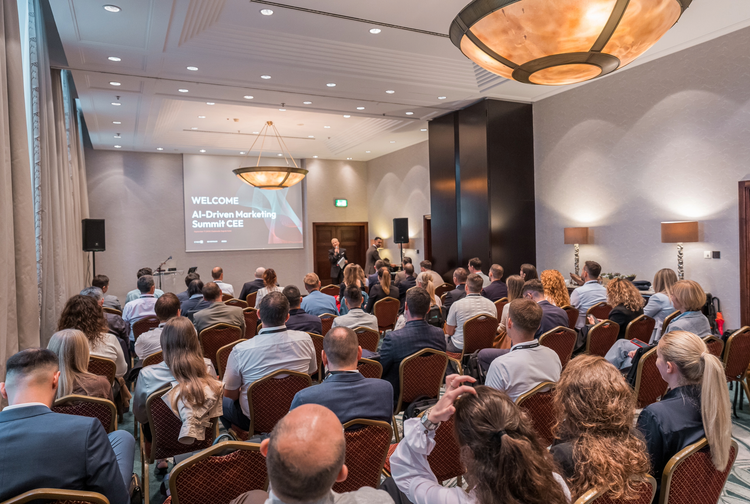
On September 17, Cyber64, Adobe and Infinum hosted the AI-Driven Marketing Summit CEE at the Esplanade Hotel in Zagreb. More than 60 senior marketing, digital and technology leaders from across Central and Eastern Europe filled every seat for one question: what is AI actually doing inside real companies right now?
If you missed it, here is what you need to know. Key takeaways
● Your next buyer may be an AI agent. Content now has to convince machines as well as people.
● AI scales your data, including the mess. Without connected, reliable data, automation only makes problems faster.
● Speed comes from standards, not tools. Teams that defined "good" before adopting AI move fastest.
Your next buyer may be an AI agent
AI scales your data. Including the mess.
Speed comes from standards, not tools
Three questions to take back to your team
1. Your next buyer may be an AI agent
Hartmut König, Adobe's CTO for Central Europe, opened with a simple scenario: a personal agent checks your Strava data and the shoes you already own, then picks and orders your next pair without you visiting a single store. The technology already exists. What's missing is consumer trust.
For brands, that changes the first job. You now have to convince the AI that talks to the customer, not only the customer. Adobe is already seeing AI agents reading its own websites, and Cyber64 CEO Tadija Malić took the idea further with AI-to-AI marketing, where your agent talks to a brand's agent and filters thousands of offers down to the few that matter.
Why it matters: an agent doesn't care how your page looks. It cares whether it can pull a correct answer from it. Content has to be structured, up to date and built around the questions people actually ask.
2. AI scales your data. Including the mess.
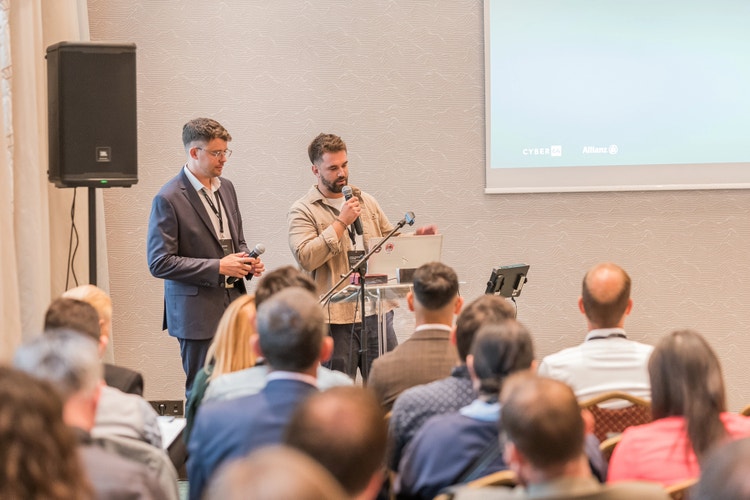
Cyber64's session paired Luka Mujkić, who leads CRM and Customer Portfolio at our client Allianz Croatia, with Viktor Lazar, Cyber64's Director of Engineering. Their message: a rule that looks perfect on a whiteboard ("if the customer has A, send B") rarely works in a real system.
● Automation needs data that is available at decision time, reliable and properly connected.
● Customer data is not customer context. In insurance, the policy, the agent, the channel and the campaign all shape the right message.
● Turning knowledge from people's heads into written, testable logic made journeys reusable instead of rebuilt for every campaign.
Alior Bank's Michał Bochnacki and Tomasz Fryc showed what this looks like at scale. Using Adobe Experience Platform, Real-Time CDP and Journey Optimizer, the bank (4M+ clients) raised the share of real-time campaigns and data from 20% to 80%, and 60% of end-to-end sales now start in the mobile channel.
Why it matters: AI changes the scale, not the fundamentals. If your data can't explain the customer journey, AI only makes the confusion faster.
3. Speed comes from standards, not tools
Luka Perić, Principal Designer at Infinum, tackled the fear in many creative teams: if AI can generate everything, is design dead? His answer was no. Infinum built a library of on-brand illustrations and learned to brief AI precisely. The result was faster work and a visibly more consistent brand across the blog, Instagram and LinkedIn.
The closing panel, with Zrinka Lepan (Infinum), Ivana Josipović (Cyber64) and Yana Bilas (Adobe), came back to the same theme: what stays human when so much can be automated? Someone still has to know what good looks like, and AI doesn't know the emotion that makes a campaign work. Or, as Hartmut put it in the line most people repeated at the coffee break: "Tools don't tell stories, storytellers do."
Three questions to take back to your team
- Could an AI agent find a correct, current answer to your customers' top questions on your website today?
- Is your customer data available, reliable and connected at the moment a decision needs to be made?
- Have you defined what "on-brand" means clearly enough to brief an AI on it?
Thank you
Thanks to Ana Butara for moderating, to Adobe and Infinum for building the day with us, and to everyone who joined, from the first keynote to the private Bugatti Rimac Campus tour the next day.
Want an invite to the next one, or to talk through your own data and AI setup? Get in touch with our team.