Audience of One: How Adobe's Summit Sneak Rewrites the Page for Every Visitor
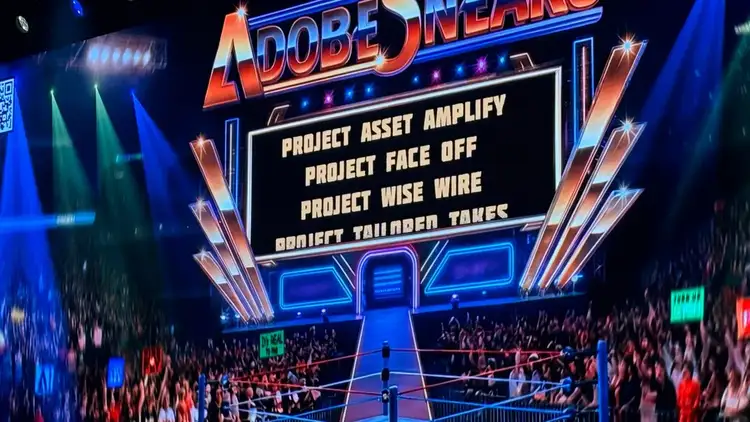
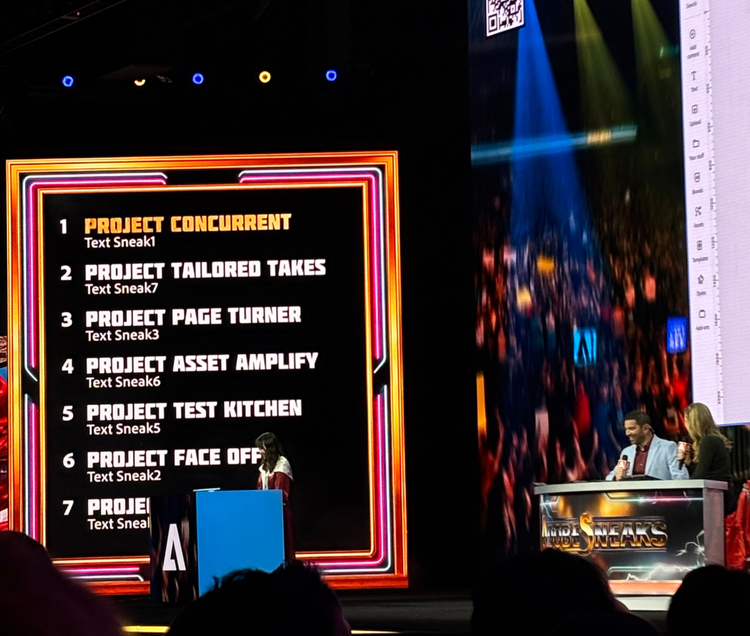
At Summit Sneaks on Tuesday night, the Adobe Experience Manager team showed something that reframes what a website can be. The project is called Project Page Turner, with white paper available at of1.live and the demo site is arco.coffee. The concept: a website that generates itself in real time, for every individual visitor, at the speed of a page load.
This is not personalization as the industry has practiced it for the last decade. There are no segments, no rules, no pre-built variants. The page does not exist until someone requests it. When they do, the site composes a unique experience from the visitor's behavior, the brand's constraints, and the page's intent.
I went through the demo, looked at the source code, and tried to guess the architecture. This article covers my assumptions on how it works, what is underneath, and what it means for the direction of content management.
The Demo: arco.coffee
"The Architecture" of what is visible from the outside
Three Paradigm Shifts
Connecting the Dots
The Demo: arco.coffee
The demo runs on arco.coffee, a fictional espresso machine brand built on AEM Edge Delivery Services. The walkthrough tells the story from the website's perspective, the site narrates what it sees and what it does.

Phase 1: Observation
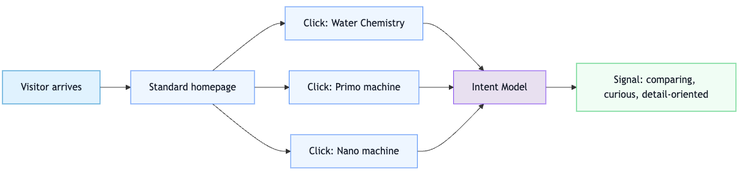
You arrive at arco.coffee. The homepage is the same as everyone else's. Machines, reviews, a brew style quiz. Standard e-commerce page. But the site is listening.
Every click feeds an intent model. You open the water chemistry article, noted. You check the Primo machine, interest climbing. You browse the Nano, five topics now. The site builds a real-time intent map: comparing, considering, exploring. Interest bars shift with every interaction.
Phase 2: Generation
Once enough signal accumulates, the page rewrites. A new page appears that did not exist a second ago. Espresso setup recommendations. Water chemistry tips. Nano versus Primo comparison, because that is where the visitor's curiosity went.
The site composes this from the visitor's observed intent, the brand's content library, and the page's purpose. No template was pre-built for this combination. No marketer created this variant. The model synthesized it.
"You don't feel targeted. You feel understood. There's a difference."
Phase 3: Conversation
The experience becomes conversational. The visitor asks: "Do I need a grinder?" The site responds with an answer informed by everything it has observed, the visitor cares about water chemistry, so it recommends the Zero grinder and explains why.
"Which is best for a beginner?" The site already has context. It does not give a generic answer. It gives a contextual one.
Phase 4: Identity
The visitor shares something personal: "I'm a cyclist. I need espresso after a ride." The page reconstructs. Post-ride brewing tips.
The site infers a morning routine: "5:45 AM. One shot. Out the door."
The homepage itself becomes unique. Built for this person. No one else will ever see this page.
"The Architecture" of what is visible from the outside
I inspected the source of both arco.coffee and of1.live. Here is what is underneath.
The Content Layer: AEM Edge Delivery Services
arco.coffee is a standard AEM Edge Delivery Services site. The HTML loads aem.js, uses the block-based structure that EDS uses, and serves optimized media through Fastly CDN with the familiar ?width=&format=&optimize= parameters.
This is the content foundation, structured, fast, CDN-delivered. The same architecture I covered in the Edge Delivery Services article earlier this year. Perfect Lighthouse scores. Semantic HTML. Content that is both human-readable and machine-readable.
The Generative Layer: Stardust
of1.live is the generative layer. The HTML source contains a provenance comment that references an internal Adobe framework:
<!-- stardust:provenance { "brand": "stardust/brand-profile.json", "briefing": "stardust/briefings/landing.md", "wireframe": "stardust/wireframes/landing.html", "synthesized": [] } -->
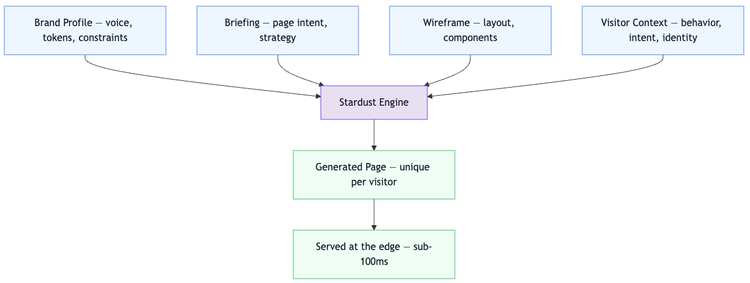
Three inputs drive the generation:
Brand Profile (brand-profile.json). The brand's voice, design tokens, visual constraints, content guidelines. This is what prevents the model from going off-brand. Every generated page must conform to these constraints.
Briefing (briefings/landing.md). The strategic intent of the page. What it should accomplish. What message it should convey. This is the marketing brief, encoded for the model.
Wireframe (wireframes/landing.html). The layout structure. Where content goes, how sections are organized, what components are available. The model fills the wireframe, it does not invent the layout.
Every <section> in the HTML carries semantic attributes:
<section data-section="hero" data-intent="emotional hook" data-layout="full-bleed">
<section data-section="manifesto" data-intent="provoke and reframe" data-layout="contained">
<section data-section="demo-video" data-intent="prove the concept" data-layout="contained">
<section data-section="social-proof" data-intent="build trust" data-layout="contained">
<section data-section="cta" data-intent="drive action" data-layout="full-bleed">
I assume that the data-intent are instructions to the generation model. The wireframe defines where content goes. The intent defines what that content should do. The model synthesizes the content that fulfills both.
The Inference Layer: Cerebras
According to reporting on Project Page Turner (the Sneak's official name), inference currently runs on Cerebras hardware. The approach is model-agnostic — any sufficiently fast model can slot in — but Cerebras delivers the speed required: sub-100ms inference, full page load under one second.
This is the critical constraint. Generative personalization only works if the generation is invisible. If the visitor perceives a delay, the experience breaks. The page must feel like it was always there, even though it was composed milliseconds ago.
Three Paradigm Shifts
1. From Variants to Synthesis
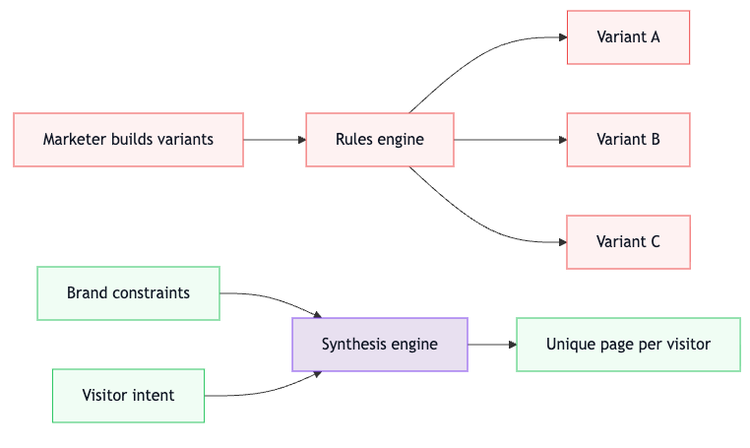
Traditional personalization operates on a variant model. Marketers create three, five, ten versions of a page. Rules or algorithms select one. The best the system can do is pick the least-wrong pre-built option.
Generative personalization eliminates the variant concept entirely. There is no pre-built inventory to select from. The page is synthesized from constraints (brand), structure (wireframe), intent (briefing), and context (visitor). The number of possible pages is effectively infinite.
2. From Page as Artifact to Page as Output
In every CMS I have worked with, AEM included, the page is an artifact. Someone creates it. It gets stored. It gets served. It may be modified, versioned, translated. But it exists as a persistent object in a content repository.
In the of1 model, the page is an output of a function. The inputs are the brand profile, the wireframe, the briefing, and the visitor context. The page is the return value. It is not stored. It is not versioned. It is computed on demand and discarded after delivery.
The source of truth shifts from the page to the inputs. The brand profile, the content library, the wireframe templates, those are the managed artifacts. The page is ephemeral.
3. From Content Delivery to Content Creation at the Edge
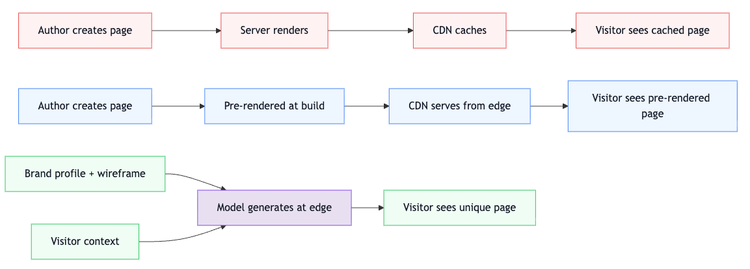
Edge Delivery Services already moved content rendering to the CDN edge. Pre-rendered HTML, served from Fastly, no application server in the delivery path.
of1 moves content creation to the edge. The page is not rendered at the edge, it is written at the edge. The CDN is no longer just a cache. It is a content factory.
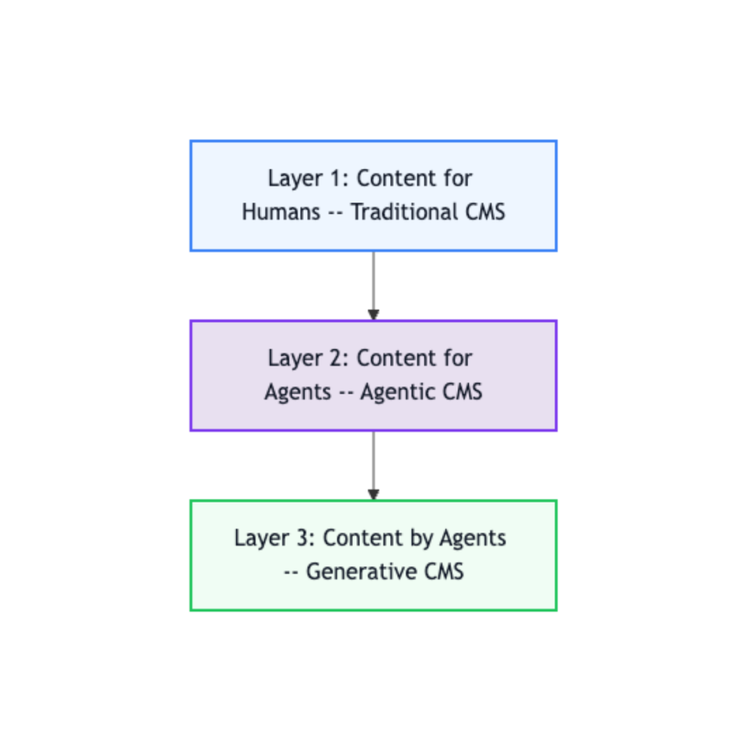
This is the third layer in a progression I have been covering across this content series.
Layer 1: Content for humans. Traditional CMS. Create pages, manage content, deliver experiences. The audience is people with browsers.
Layer 2: Content for agents. The Agentic CMS from the OS336 session earlier this week. Structured content that AI agents can read, understand, and represent. The audience expands to include machines.
Layer 3: Content by agents. The website itself is generated by an AI agent, constrained by brand rules, informed by visitor context, delivered at the edge. The agent is not just consuming content, it is creating the experience.
The MCP → Agents → Orchestrator model I covered in the three-layer article maps to the infrastructure. MCP provides tool access to content. Agents automate content workflows. The Orchestrator coordinates across products. of1 adds a new consumer of that same content foundation: a generative layer that uses structured content, brand profiles, and visitor signals to write the experience in real time.
What This Means for Teams
This is still a Sneak
The of1.live footer says it explicitly: "Early-stage technology by the Adobe Experience Manager team." Sneaks are pre-development concepts. Some ship. Some do not. Do not plan your 2026 roadmap around this.
The content foundation matters more than ever
Whether or not this ships as a product, the direction is clear. Structured content, well-defined brand profiles, and clean content architecture are prerequisites for any form of generative personalization. Teams that invest in content structure now are building the foundation for whatever comes next.
The role of the marketer shifts
In the variant model, marketers create content. In the generative model, marketers define constraints, brand voice, strategic intent, guardrails. The shift is from author to architect. From writing the page to defining the rules the page must follow.
Performance is non-negotiable
Generative personalization only works at inference speeds that are invisible to the visitor. Sub-100ms. This is why the demo runs on Cerebras, not a general-purpose cloud GPU. The hardware constraint is real and will determine when this moves from Sneak to product.
References
- of1.live
- arco.coffee
- Edge Delivery Services Overview
- AI in AEM as a Cloud Service
- Project Page Turner Analysis (The AI Economy)