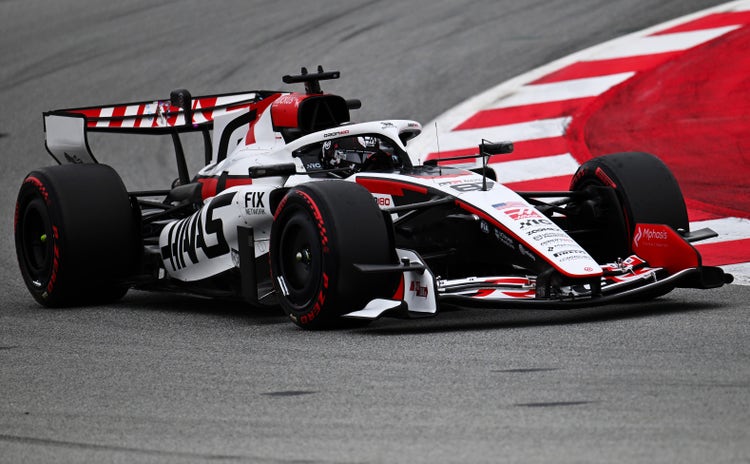
Haas needed their digital platform to move as fast as their machines. Now it does.
What we walked into
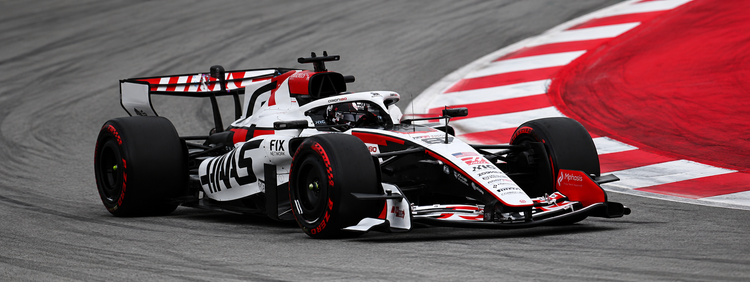
Haas Automation is one of the world's largest CNC machine tool manufacturers and a long-standing partner of the Haas F1 Team. In other words, it’s a company where precision and speed aren't aspirational values but operational baselines. Their digital presence needed to meet the same standard.
The AEM platform behind their global website network had grown unwieldy. Multiple markets ran on separate workflows, slowing time-to-market, QA and server maintenance were largely manual, and development teams in the U.S., Croatia, Morocco, and Australia were working with no common cadence, no unified backlog, no predictable delivery rhythm. The component library had gotten to the point where new market rollout multiplied technical debt instead of reusing what already existed.
Haas needed their digital operations to work the way their machines do: fast, repeatable, and precise regardless of where in the world they're running.
At a glance
- Agile transformation and QA Pyramid: Scrum and a full testing framework (Unit, Integration, Performance, UI, Manual) implemented across a four-continent team
- AEM platform overhauled: version upgrades, component simplification, Solr search, and 8,000+ products and pages launched across global markets
- SAP Commerce Cloud: stabilised with automated product ingestion across channels.
- 80% of operations automated: on-prem server maintenance, deployments, and QA pipelines moved from manual to scripted
- 24-hour development cycle: time-zone differences across four countries engineered into a productivity advantage
How it came together
Before fixing the platform, we fixed how the team works
The technical debt was real, but it wasn't the root cause. Teams across four countries were building and releasing without shared practices — priorities were unclear, feedback loops were slow, and releases were unpredictable. Fixing AEM without fixing the operating model would have produced a cleaner platform that still shipped erratically.
“Cyber64 helped us maintain agility while establishing robust Scrum processes and technical excellence in Adobe Experience Manager (AEM) and SAP CX (Hybris). Their dedicated QA team ensured thorough testing and validation at every level of our software, contributing to the success of our digital initiatives.”
— Joseph N., Digital Marketing Manager, Haas Automation Inc.
Cyber64 introduced Scrum as the delivery framework and built a QA Pyramid covering five layers: Unit, Integration, Performance, UI, and Manual testing. Every layer of the software now gets validated before anything reaches production. Sprint cadences were synchronised across time zones — but more than that, the time-zone spread was deliberately turned into an asset. With teams in the U.S., Croatia, Morocco, and Australia, work progresses around the clock: a feature started in Zagreb gets reviewed in Oxnard and tested in Melbourne before the original developer's next morning standup.
The 16x acceleration in release cycles came from this structural shift, not from a plug-in upgrade.
Then the platform got rebuilt for scale
With a working delivery model in place, we addressed the AEM platform itself. The component library and templates had sprawled — too many variations, too much overlap, too much maintenance cost every time a new market was added. The Cyber64 team streamlined the library significantly, consolidating overlapping components into a leaner, more reusable set that made multi-site rollouts efficient instead of expensive.
“What sets Cyber64 apart is their ability to provide high-level solutions, transcending technology barriers. They understand our business requirements and seamlessly translate them into precise technical specifications.”
— Joseph N., Digital Marketing Manager, Haas Automation Inc.
Solr search was integrated across the platform, replacing a near-invisible search experience with advanced capabilities that users actually engage with. The 200x increase in search usage reflects how fundamentally the previous experience was failing — and how much behaviour changes when product and content discovery actually works.
From there, 27 new markets and languages were launched on the unified architecture, with 8,000+ products and pages deployed on shared templates and consistent site management. Each rollout follows the same pattern. No market is a snowflake.
Ongoing upgrades keep the platform future-ready
This wasn't a one-off transformation. We have managed continuous AEM version upgrades and service-pack rollouts throughout the four-year partnership, keeping the platform secure, performant, and aligned with Adobe's evolving roadmap. Backlog management runs alongside these upgrades so that maintenance work doesn't crowd out product development.
On the infrastructure side, on-prem server maintenance was automated, removing manual intervention, minimising downtime risk, and freeing developer time for work that actually moves the product forward. Combined with automated QA pipelines and CI/CD integration, 80% of operational tasks now run without human involvement. Deployments are predictable, releases are confident, and the team ships more often because the pipeline lets them.
Precision at platform scale
Four continents, 27 markets, 8,000+ pages — one operating model and the numbers to prove it all works.
200x
Increase in search engagement
Solr integration replaced a failing search experience with one customers and partners actually rely on to find products and information across the global site.
16x
Faster development and release cycles
Scrum, a five-layer QA Pyramid, and a 24-hour distributed delivery model turned sporadic releases into a predictable, rhythmic cadence
What our clients say
Hear directly from the people we work with about the experience, the collaboration, and the results.
Work
Each of our projects starts with a business problem. Here's what happens next.
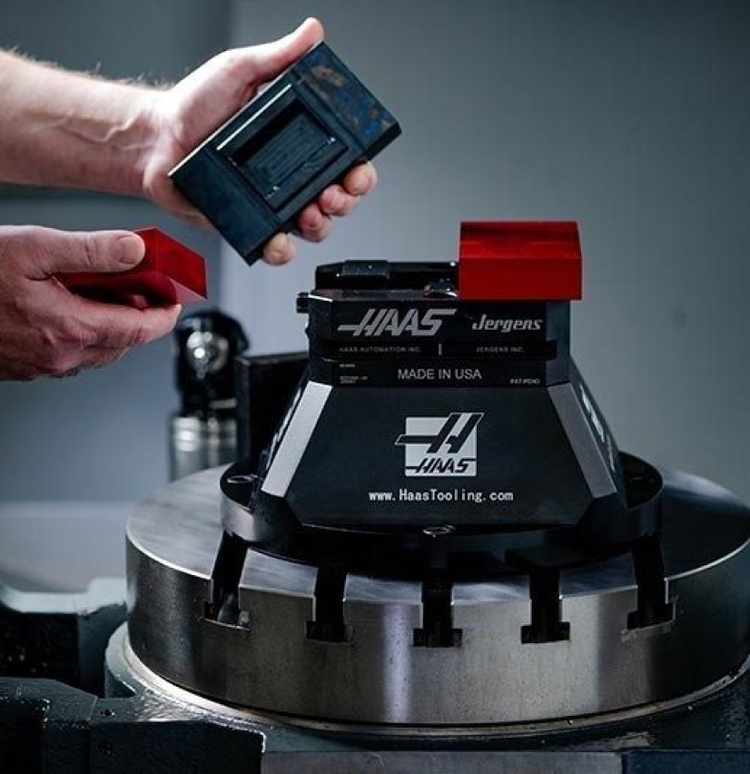
Haas Tooling
E-commerce | AEM | Performance & Optimization